
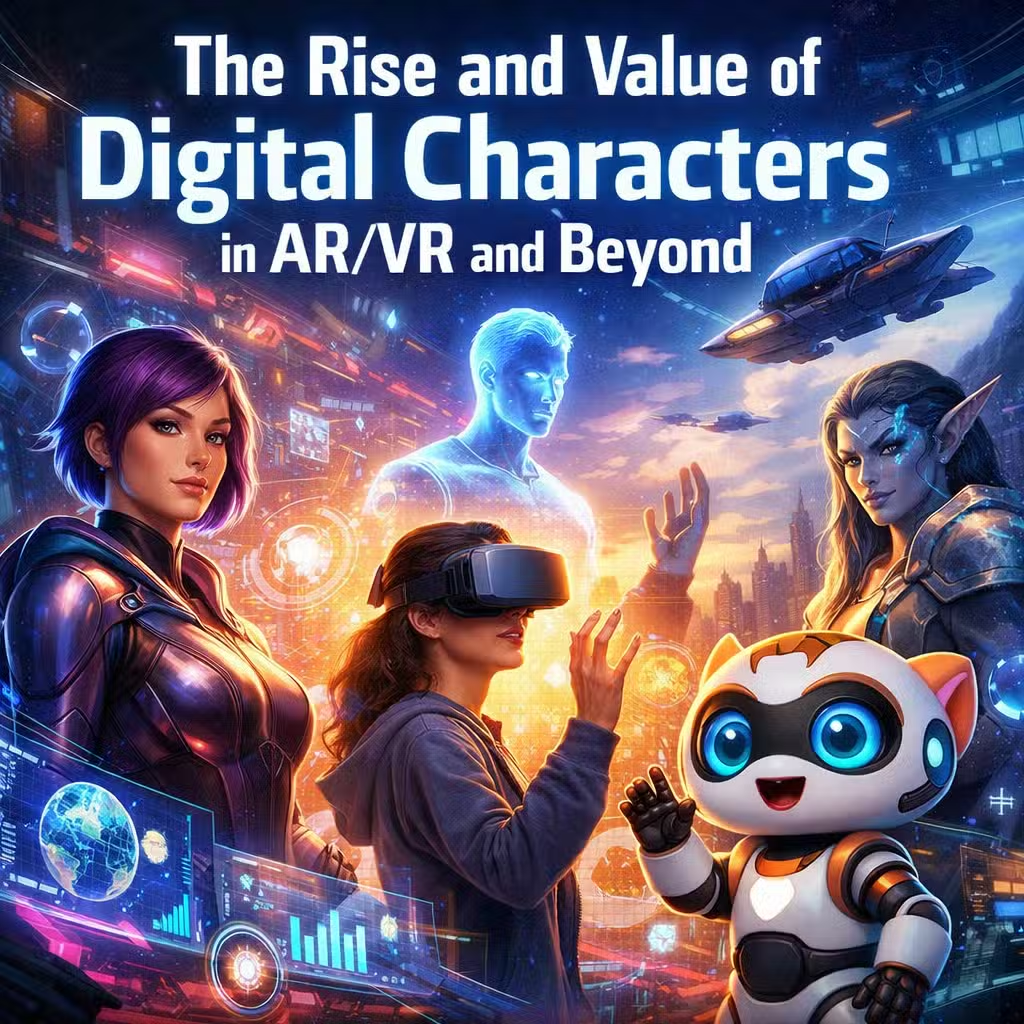
Digital characters, or digital avatars, are reshaping the way humans interact with technology. Once confined to games or movies, they now populate mixed reality experiences, training simulators, marketing campaigns, and the metaverse. Whether photorealistic or stylized, these 3D characters bring emotion, personality, and realism to virtual environments, bridging the gap between humans and machines.
The Tools of Creation: From MetaHumans to Digital Twins
Creating lifelike digital characters has become more accessible and powerful than ever. Platforms like Unreal Engine’s MetaHuman Creator, Character Creator 4/5, and Daz 3D enable artists and developers to sculpt and animate realistic people, or entirely fictional beings. These tools provide high-fidelity character bases with customizable morphs, materials, and animation rigs.
Some creators go a step further, using photo-based generation or 3D scanning to replicate real individuals. Our partnership with Evercoast has allowed us to produce fully volumetric digital twins, true-to-life recreations of real people, captured with depth and motion data. Combined with Radical Motion, which extracts realistic body motion from standard video, we can create animated avatars without complex motion-capture setups.
Digital Character Motion
Creating believable movement is one of the most critical aspects of bringing digital characters to life. Motion defines personality, realism, and emotional resonance. There are three core methods that drive motion realism today:
1. Volumetric Capture
This method captures the exact motion of a real human, mapping every movement frame by frame into 3D space. It often includes high-precision surface appearance data, creating avatars that look and move exactly as they were recorded. Volumetric capture is ideal for historical or scripted performances where authenticity is paramount. However, it does not allow for easy modification or dynamic variation in motion once captured.
2. Motion Capture (MoCap)
Traditional motion capture uses sensor-based systems (like Xsens or OptiTrack) or multi-camera optical systems to track body movement and joint positions. AI-assisted motion mapping, using tools such as Radical Motion or Google’s MediaPipe, can extract motion data directly from standard video footage. While this AI-driven approach simplifies capture and reduces setup complexity, it may lack fine-grained accuracy, especially in finger, hand, and subtle gesture tracking.
3. AI-Generated Motion
AI-generated motion uses pre-trained models that understand human biomechanics to simulate natural movement. These models can auto-generate believable motion sequences or procedurally fill in gaps between animations. While powerful for generating dynamic or context-driven movements, AI systems can sometimes produce unrealistic or exaggerated results that break immersion.
Lip Sync and Facial Animation
Facial animation has become increasingly advanced, often leveraging real-time AI video capture to map facial expressions and speech to avatar blendshapes. These systems use facial feature mapping to synchronize lips, eyes, and expressions with voice input.
Modern solutions (such as Unreal Live Link Face, Reallusion AccuLips, and Apple’s ARKit facial tracking) offer real-time facial performance capture that mirrors subtle expressions like blinking, eyebrow motion, and mouth shape. The result is a highly convincing, emotionally resonant digital dialogue that enhances believability and user engagement.
Advanced facial tracking tools and software, such as Apple’s ARKit blendshapes, Unreal Live Link Face, and Reallusion’s AccuLips, map voice input and camera data to facial movements. This adds emotion and realism, particularly when combined with speech-driven blend-space animation systems.
The Benefits of Digital Characters
- Scalability: Once created, a digital human can exist anywhere, VR, AR, film, WebGL, or even as a hologram.
- Authenticity: Realistic motion and expression deepen immersion and emotional connection.
- Longevity: Digital twins can preserve the likeness of individuals long after the moment of capture.
- Efficiency: AI-assisted pipelines reduce time and cost for motion and voice performance.
Use Cases Across Industries
- Entertainment & Gaming: Digital actors, AI-driven NPCs, and virtual influencers.
- Tourism & Heritage: Historic figure recreations, AR guides, or museum storytellers.
- Product Representation: Interactive digital brand ambassadors or store avatars.
- Education & Training: Immersive trainers and simulated human interaction for skill learning.
- Healthcare & Therapy: Empathetic virtual assistants or exposure therapy guides.
The AI Connection
AI gives digital characters life beyond animation, enabling them to engage in conversation and exhibit adaptive behavior. Platforms like Inworld, Charisma.ai, and Convai enable personalities that react naturally to users, driven by large language models. AI-driven lip-sync tools such as Altered Studio, Replica Studios, and Coqui TTS combine voice synthesis with real-time facial animation.
Emerging Technologies to Explore
- Voice & Expression Capture: RADiCAL, DeepMotion, and Dynamixyz.
- AI-driven Performance: Inworld AI, Charisma.ai, Convai, and NVIDIA ACE.
- Facial Animation Tools: Live Link Face, Faceware, DeepMotion Animate 3D.
- Cross-Platform Integration: Using these avatars in WebGL, mobile AR, and VR headsets.
Human Perception of Digital Avatars
Human perception of digital avatars is deeply rooted in how our brains interpret realism and authenticity. While technology strives for perfect replication, human psychology often responds differently depending on the degree of realism and familiarity.
1. Appearance: Real vs. Fictional
- Realistic Avatars: Highly detailed models can evoke fascination but risk entering the uncanny valley, where characters look almost human but slightly off, triggering discomfort.
- Fictional or Stylized Characters: Simplified or cartoon-like avatars are generally more accepted because audiences expect exaggeration. These designs bypass the uncanny valley by leaning into creativity rather than imitation.
- Key Factors: Skin texture, eye realism, and micro-expressions (like blinking frequency) play crucial roles in perceived authenticity.
2. Voice and Speech
- Synchronization: When lip movements do not align perfectly with audio, immersion breaks quickly. Humans are hypersensitive to timing mismatches, as they disrupt the cognitive processing of speech.
- Tone and Emotion: A voice that lacks natural inflection or emotional tone can feel robotic. Subtle pauses, breathing sounds, and emotional cadence help bridge the gap between digital and human.
- AI Speech Tools: Technologies like Replica Studios, Altered, and Coqui TTS improve this by blending speech synthesis with real-time emotional delivery.
3. Movement and Behavior
- Natural Motion: Smoothness, timing, and subtle joint motion are critical. Overly rigid or repetitive movements can trigger unease.
- Micro-Gestures: Eye movement, posture shifts, and head nods signal attention and emotional state—crucial for realism.
- Psychological Response: When avatars emulate human motion accurately, users feel a connection; when motion is slightly off, it creates subconscious tension.
Psychological Effects
- The Uncanny Valley explains why near-perfect human replicas may feel unsettling while clearly fictional avatars do not.
- Consistency between appearance, voice, and movement enhances trust and empathy toward avatars.
- Emotional authenticity (eye contact, tone, and timing) determines whether people engage or withdraw.
- Well-crafted avatars can foster genuine emotional connection, especially in learning, therapy, and storytelling contexts.
Ethical Considerations and Digital Rights
As digital humans become more realistic and autonomous, ethical considerations take center stage. The power to recreate human likeness or behavior introduces new responsibilities for creators, developers, and organizations.
Human Likeness and Consent
- Identity Ownership: Using a person’s image, voice, or likeness without permission raises legal and moral concerns. Digital likeness rights are emerging as critical components of content licensing.
- Consent and Representation: Even with consent, how a person’s avatar is portrayed matters. Misuse or distortion can harm a reputation or cause emotional distress.
- Posthumous Representation: Digitally reviving deceased individuals for new performances or experiences introduces cultural and ethical dilemmas about legacy and intent.
Misrepresentation and False Narratives
- Deepfakes and Manipulation: AI-generated avatars can be used to spread misinformation or impersonate real people. Distinguishing between authentic and synthetic content is increasingly challenging.
- Authenticity Markers: Ethical practice involves labeling or watermarking digital characters to ensure transparency.
- Bias and Stereotyping: AI-driven avatars can unintentionally reflect societal biases embedded in their training data, reinforcing stereotypes if not carefully managed.
Digital Rights and Governance
- Ownership of Digital Identity: Questions remain about who controls and profits from a digital twin, the individual, the creator, or the platform.
- Data Privacy: Motion, facial scans, and voice data are highly personal. Secure storage and transparency in use are essential.
- Regulation and Standards: Emerging frameworks may govern synthetic media, ensuring fair use, traceability, and accountability in public and commercial applications.
Ethical Design Principles
- Promote transparency by identifying AI-generated personas.
- Prioritize consent and equitable representation when creating digital humans.
- Embed traceability into workflows to track usage and alterations.
- Foster cross-industry collaboration to develop best practices for digital identity protection.
Conclusion
Digital characters sit at the intersection of art, technology, and identity. Whether used for immersive training, entertainment, or digital preservation, they represent a fusion of creativity and computation. The future of interaction is not just virtual, it’s humanly digital.
To get started on that future, contact us here at Seisan!
Further Reading and References
| Title | Source | Link |
| The Rise of (Humanized) AI Avatars And Their Practical Use Cases | Tobias Zwingmann Blog | Read here |
| Metaverse, Volumetric Content and Digital Avatar | Medium / Data-Driven Fiction | Read here |
| AI On: Digital Avatars With Speech Capabilities Offer Interactive Customer Experiences | NVIDIA Blog | Read here |
| Digital Humans Are Here — & They’re Changing Everything | Synthesia Blog | Read here |
| Digital Humans: Use Cases, Examples, and Best Practices | D-ID Blog | Read here |
| Meet AvatarOS: 3D Avatars in a 2D World | M13 Article | Read here |
| The Game Changer for AI Avatars — Digital Humans: Out of the Box! | NTT DATA Solutions Blog | Read here |
| AI-Powered Digital Avatars: The Future of Personalized Interaction | Troon Technologies Blog | Read here |
| Digital Human Avatars, Deepfakes, and All That AI Nonsense | Guildhawk Blog | Read here |
| 4 Use Cases for Volumetric Capture | Metastage Blog | Read here |
| The Rise of Digital Avatars: How AI and VR Are Shaping Virtual Identities | Ortmor Agency Blog | Read here |
| Digital Humans: Where Technology and Humanity Converge for a Healthier Future | EVERSANA InTouch Blog | Read here |


