
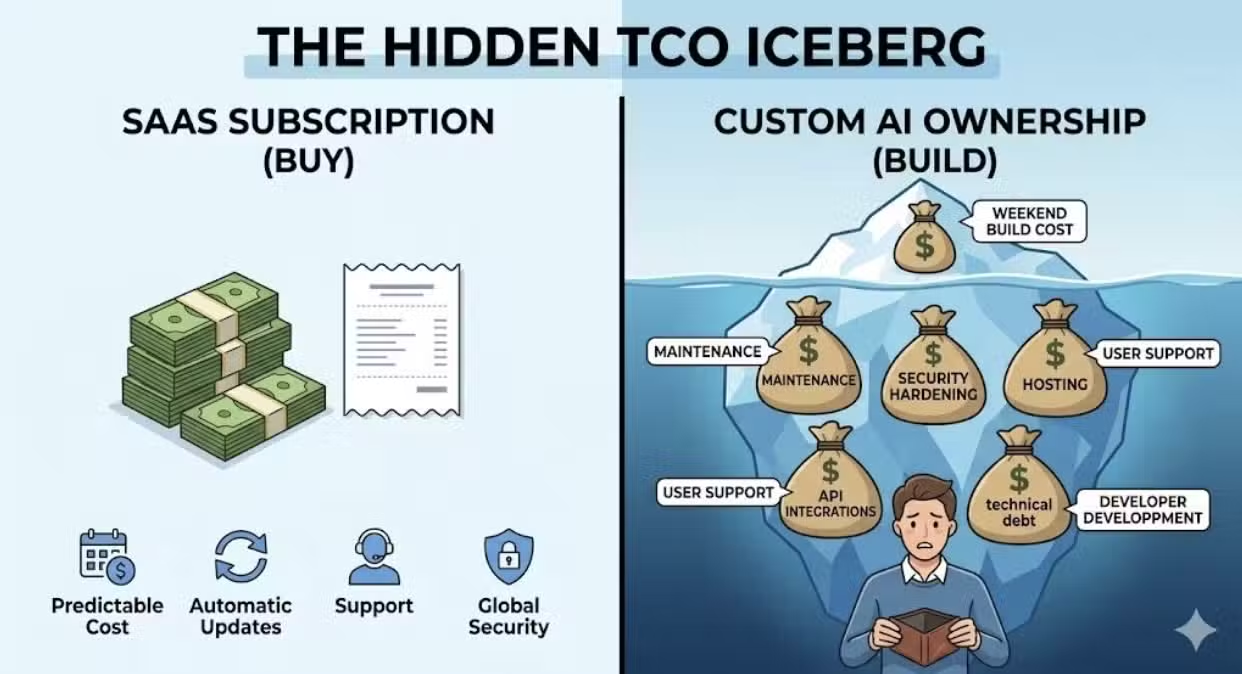
I recently spoke with a founder who was feeling the burn of his monthly software bills. He saw his SaaS costs climbing and decided to take matters into his own hands by replacing three of his core tools with AI-coded alternatives built over a single weekend.
On Monday morning, he was a hero; he had “fired” his vendors and saved his company thousands in recurring fees. But by the six-month mark, the celebratory mood had evaporated.
He was now paying a developer full-time just to keep those weekend-built apps running. Even worse, his team realized they had lost critical features they didn’t even know they relied on until they were gone.
The promise was simple: total control and massive savings. The reality was a mountain of expensive technical debt that threatened his operations.
As someone who manages complex software projects, I see this temptation everywhere. AI coding tools are transformative, but they often make building software look much easier than maintaining it.
The SaaS Sticker Shock is Real
Let’s be honest: SaaS costs add up with frightening speed. It starts with one tool, but soon you find yourself stuck in a cycle of “subscription creep”.
Your company ends up paying for Slack, HubSpot, project management suites, and analytics platforms simultaneously. Before you know it, you are managing a dozen different tools, each with its own per-seat pricing model.
This model takes a heavy toll as your company grows. I’ve seen mid-sized companies spend anywhere from $50,000 to $200,000 annually just to keep the digital lights on.
When executives see those numbers, they inevitably start asking the same question: “We have AI now; can’t we just build a custom version of this ourselves?” It is a logical question, but the answer is rarely as simple as the sales pitch for AI tools suggests.
Why AI Coding Makes This Tempting
The allure is easy to understand because modern AI coding tools like GitHub Copilot, ChatGPT Codex, Cursor, Loveable, and Claude Code make building software feel like magic.
You can prototype a functional CRM replacement in a matter of hours rather than months. Because the initial build feels so cheap compared to an annual SaaS subscription, the math looks incredible on a spreadsheet.
These tools are exceptionally good at generating the initial structure and logic of an application. They handle “boilerplate” code with ease, allowing you to see a working product almost instantly.
In my experience, AI can get you about 80% of the way to a finished product in record time. It is that first 80% of functionality that makes the “build” option seem like a no-brainer.
The 80/20 Problem Nobody Talks About
The danger lies in the final 20% of the build. This is where most “SaaS replacement” projects go to die.
AI is great at basic operations, but professional SaaS products represent years of refined edge cases, security hardening, and deep user experience work. Replacing a tool means you are responsible for all of that hidden complexity.
Take authentication, for example. It is easy for an AI to build a simple login page, but it is incredibly difficult to properly implement Single Sign-On (SSO), Multi-Factor Authentication (MFA), and secure password recovery.
Then there is the issue of data migration. An AI can build database tables, but it cannot automatically migrate millions of existing records while maintaining data integrity.
Furthermore, SaaS companies provide 99.9% SLAs and constant monitoring that you likely aren’t prepared to match. For a deeper look at why the “vibe coding” trend can lead to operational failure, check out our thoughts on custom software development services.
The Real Cost of Ownership
When you stop paying a subscription, you take on the role of the software vendor. “Owning” software means you are now responsible for everything that can go wrong.
Someone has to maintain the code when it breaks, update it when your business requirements change, and secure it when new vulnerabilities emerge.
You also have to support your internal users when they inevitably have questions or run into bugs. SaaS vendors include all of this in their monthly fee. When you build a custom app, you need a person or a team to own those responsibilities.
Consider the math: a single skilled developer might cost your company $120,000 per year. If that developer spends half their time maintaining your custom “SaaS replacements,” you are likely spending far more than the original subscription fees.
Before you decide to build, I recommend reviewing Gartner’s research on Total Cost of Ownership (TCO) to understand the long-term financial commitment.
When Replacement Actually Makes Sense
I am not saying you should never build. There are specific scenarios where custom-coded applications are the superior choice.
If a particular SaaS tool doesn’t fit your workflow and you find yourself paying for a massive feature set you never use, a lean, custom alternative might be worth the investment. Similarly, companies with very specific compliance or data residency requirements that standard SaaS cannot meet often find that custom builds are the only path forward.
If a piece of software is core to your competitive advantage—something that truly differentiates your business—then you should absolutely own it.
However, these are narrow use cases. For commodity functions like email, basic CRM, or team chat, building your own is usually a distraction from your core mission.
The Smarter Approach
There is a middle ground that most companies overlook. Instead of full replacement, focus on using SaaS for commodity functions and building custom code only for your “secret sauce”.
The most effective strategy is often integration rather than replacement. You can automate complex workflows between your existing tools using custom code without rebuilding the tools themselves.
I once worked with a client who was ready to dump their entire stack. Instead, we built a custom integration layer that connected three of their existing SaaS tools.
This saved them the cost of a massive custom build while giving them the specific functionality they needed. If you’re looking to bridge the gap between your existing tools, explore our API development services for a more sustainable path.
Don’t Let AI Coding Become Expensive Regret (~100 words)
AI coding tools are incredibly powerful, but they are tools, not a total replacement for software governance. They make building look significantly easier than maintaining.
Most companies I advise tend to underestimate the ongoing costs of custom software while overestimating their ability to support it long-term.
SaaS costs are predictable line items; custom replacement apps rarely are. At Seisan, we help leaders navigate these “build vs. buy” decisions with data and operational rigor, not hype.
If you are currently staring at a massive SaaS bill and wondering if there is a better way, let’s talk. We can help you determine where custom AI-coded apps fit into your roadmap, and where they don’t.
Contact the Seisan team today to discuss your software strategy.


