
Most companies are implementing AI incorrectly. Discover the three research-backed reasons AI projects fail, and how to fix them in 2026.
Enterprises today are under enormous pressure: AI is no longer a “nice-to-have,” data velocity is speeding up, and security threats evolve daily. Yet organizations are crashing headfirst into modernization pitfalls because the applications they depend on were never truly ready for this era.
The hard truth I’ve seen across dozens of engagements at Seisan is simple: companies don’t fail because of AI, they fail because their core apps aren’t ready to support AI, automation, cloud-scale operations, and secure integrations.
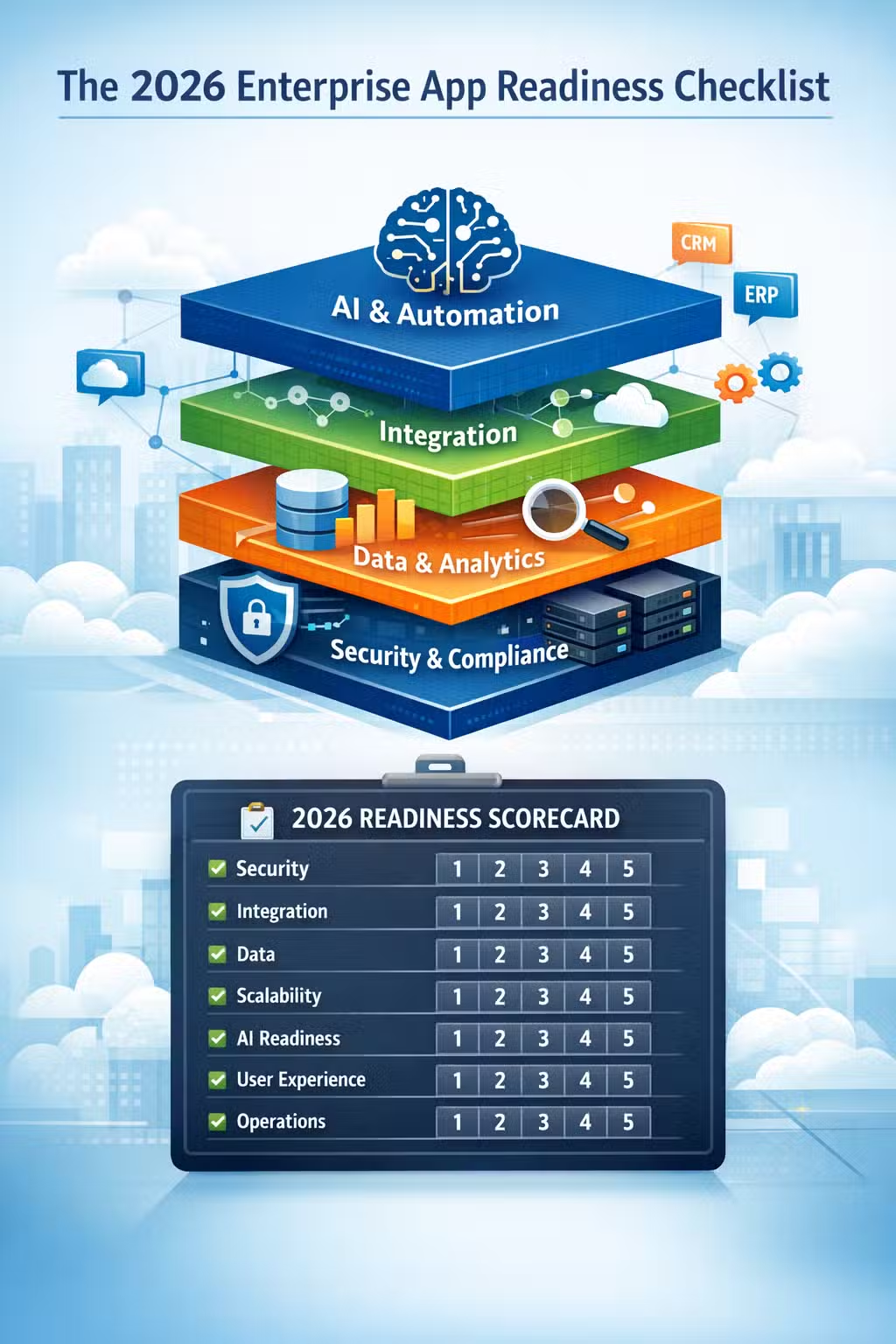
This isn’t about being “technical.” It’s about being prepared. Below is a pragmatic, business-friendly checklist you can use to score your enterprise apps across seven key areas. Treat each one as a readiness axis, score yourself from 1 (novice) to 5 (expert), and see where the real blockers lie.
🎯 Enterprise Readiness Scorecard
| Category | Score (0-5) |
|---|---|
| 🔒Security |
1
2
3
4
5
|
| 🔗Integration |
1
2
3
4
5
|
| 📊Data |
1
2
3
4
5
|
| 📈Scalability |
1
2
3
4
5
|
| 🤖AI Readiness |
1
2
3
4
5
|
| ✨UX |
1
2
3
4
5
|
| ⚙️Operations |
1
2
3
4
5
|
1. Security & Compliance — Protect Before You Innovate
Security today isn’t optional, and traditional perimeter defenses aren’t enough. Modern threats exploit weak authentication, poor encryption, and outdated compliance postures.
What to ask:
- Do we use multi-factor authentication and role-based access?
- Is all data encrypted in transit and at rest?
- Are we aligned with standards like SOC 2, HIPAA, or GDPR?
At Seisan, helping clients modernize authentication and governance has reduced security incidents before any AI or analytics initiatives even launched. Less firefighting, more innovation.
2. Integration & Connectivity — Apps that Talk
Your enterprise app should be the hub of business operations, not an island.
Today’s enterprise landscape demands real-time data and connectivity across CRM, ERP, field systems, and cloud services. That means:
- Robust APIs with clear documentation
- Real-time or near-real-time data sync
- Native connectors to modern tools like Salesforce, NetSuite, ServiceNow
Learn how we help companies connect legacy systems to modern platforms in our System Integration services and Legacy Modernization solutions.
3. Data Quality & Governance — Clean Data = Trusted Decisions
AI and automation rely on trustworthy data. When data is fragmented, inconsistent, or owned by silos, AI outputs become unreliable.
Key indicators of readiness:
- Clean, normalized datasets
- Unified definitions across teams
- Clear ownership and governance
We’ve seen analytics projects stall simply because sales and operations had different definitions for “customer,” an easy fix with huge impact. Good data governance is foundational.
4. Scalability & Performance — Built for Growth
An app might be stable today, but what happens at peak load? Scalability isn’t just about faster servers; it’s about architecture.
Ask:
- Can the system handle load spikes?
- Is it deployed in the cloud or a hybrid cloud for elasticity?
- Do we monitor performance in real time?
Seisan’s Cloud Modernization services help organizations move from brittle on-prem systems to scalable, monitored environments.
5. AI Readiness & Automation Potential — Plug-In Future
AI shouldn’t be an add-on; it should be native to your evolution.
Readiness means:
- Clean data pipelines that support automated ingestion
- Clear workflows that can be automated
- Interoperability with AI and automation platforms
This step is where many enterprises fail, they adopt tools without prepping the underlying application. AI projects succeed when the foundation is solid.
For more on preparing systems for AI and automation, see our AI & Intelligent Automation Services.
6. User Experience & Accessibility — Adoption Matters
Even the most powerful system fails if people don’t use it.
Consider:
- Is navigation intuitive and logical?
- Does it work on mobile devices?
- Does it meet accessibility standards?
User experience fuels adoption. If the frontline rejects your tools, nothing else matters.
7. Operational Sustainability — Can Your Team Maintain It?
Lastly, readiness isn’t just technical; it’s operational.
Ready systems have:
- Robust documentation and knowledge transfer
- Mature DevOps processes with automated testing & deployment
- Strong vendor support and maintenance plans
This ensures you’re not dependent on heroic individuals or tribal knowledge.
Your Roadmap to 2026 and Beyond
After scoring each area, you’ll begin to see where the risks and opportunities are. Scores of 1–2 indicate immediate attention; 3–4 are areas for structural improvement; 5s are competitive advantages.
If your app isn’t scoring where it needs to be, or if you’re planning AI or automation initiatives on shaky ground, we should talk. A short readiness review can uncover hidden barriers before they become expensive problems.
Ready for a Readiness Review? Book a call with Seisan today.
External Resources
- NIST Cybersecurity Framework — A trusted government standard for modern enterprise security
https://www.nist.gov/cyberframework - U.S. AI.gov — National AI Initiative Office — Federal coordination on AI policy & readiness
https://www.ai.gov


