
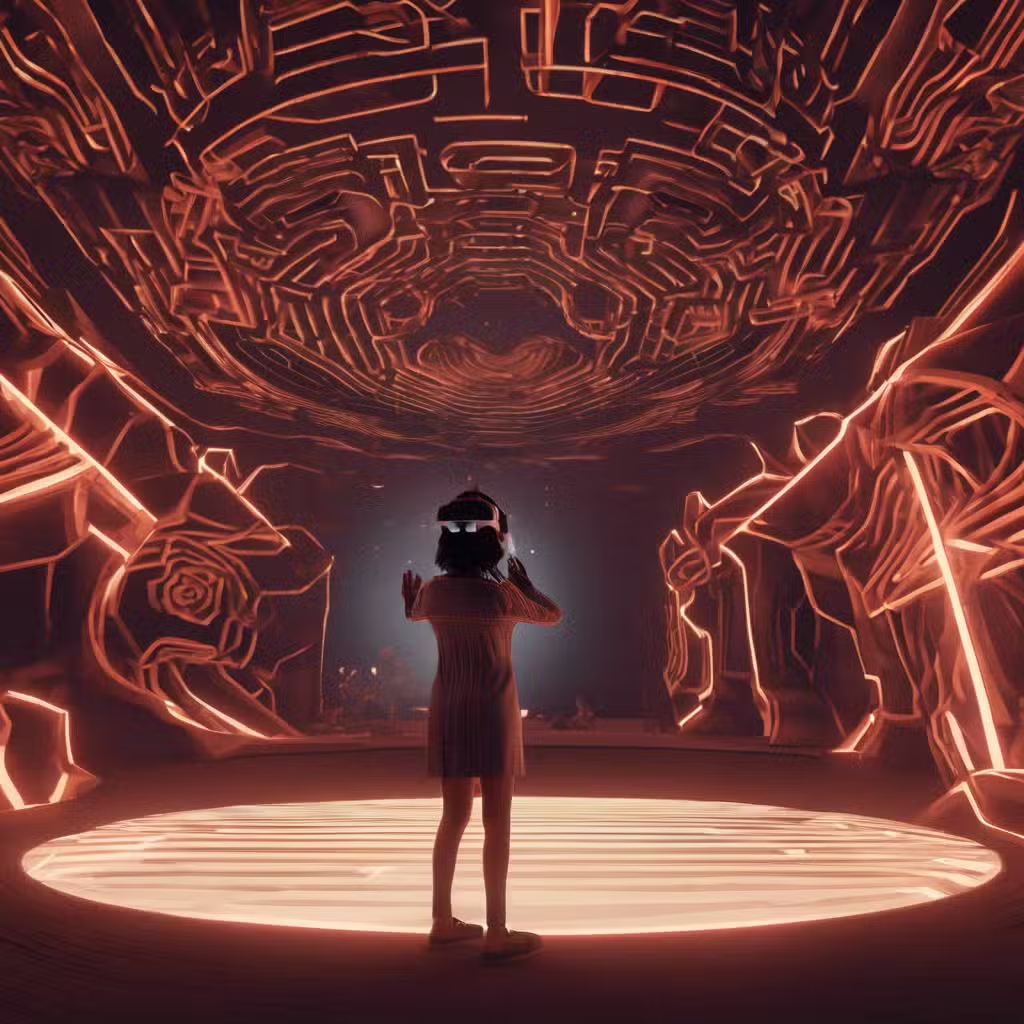
Life After Full Dive VR Arrives
The arrival of full dive VR will mark one of the most significant technological milestones in human history. Unlike previous computing revolutions that changed how we interact with information, full dive VR will fundamentally alter our relationship with reality itself.
Early adoption will likely follow familiar patterns, with expensive systems available to researchers, medical professionals, and wealthy early adopters before gradually becoming accessible to broader audiences. The transition period could span 5-10 years as the technology matures and costs decrease.
Industries that rely heavily on training, simulation, and remote collaboration will be the first to transform. Medical training, aerospace engineering, and military applications will likely lead the charge, followed by the entertainment and education sectors.
The shift won’t happen overnight, but when it does, the changes will be profound and irreversible. Organizations that understand and prepare for this transformation will have significant competitive advantages.
Revolutionary Applications and Use Cases
Education will be reimagined entirely when students can experience historical events firsthand, explore molecular structures from the inside, or practice surgical procedures without risk to themselves. The limitations of physical classrooms and textbooks will seem quaint in comparison.
Healthcare applications will extend far beyond training. Therapy sessions can take place in carefully controlled virtual environments specifically designed to address particular conditions. Patients with mobility limitations can experience adventures and activities that are impossible in the physical world.
Entertainment will evolve beyond our current imagination. Instead of watching movies or playing games, we’ll live stories and inhabit worlds with complete sensory fidelity. Social experiences will transcend physical distance, allowing truly shared adventures with people anywhere in the world.
Professional collaboration will no longer be constrained by geography or physics. Architects could walk through buildings before construction, engineers could test designs in impossible conditions, and teams could work together in shared virtual spaces that enhance rather than limit their capabilities.
Social and Cultural Transformation
Human relationships will adapt as virtual presence becomes indistinguishable from physical presence. The concept of “long-distance” relationships may become obsolete when couples can share fully immersive experiences regardless of physical location.
Virtual tourism will democratize travel experiences, making exotic locations and historical periods accessible to everyone. This could reduce the environmental impact of physical travel while expanding opportunities for cultural exchange.
New art forms will emerge that exist only in virtual spaces, utilizing impossible physics and unlimited creative possibilities. Artists will craft experiences rather than objects, creating emotional and sensory journeys that transcend traditional media.
The distinction between “online” and “offline” life will blur significantly. Virtual experiences will carry the same emotional weight and meaning as physical ones, fundamentally altering how we perceive authenticity and reality.
Challenges and Adaptation Period
Physical health concerns will require careful management and attention. Extended full dive sessions could lead to muscle atrophy and cardiovascular issues if not properly regulated. Usage guidelines and built-in safety systems will become essential.
Digital addiction risks will intensify when virtual experiences can be more compelling than physical reality. Society will need to develop new frameworks for healthy technology use and maintaining a connection to the physical world.
Privacy and security concerns will reach unprecedented levels when neural interfaces can access thoughts and emotions. Robust protection systems and clear consent frameworks will be crucial for widespread adoption.
Economic disruption will affect industries differently. While some sectors will boom, others may struggle to remain relevant. The job market will need to adapt rapidly to new skill requirements and virtual work environments.
Preparing for the Full Dive Future
The time to start preparing for full dive VR is now, not when it arrives. Businesses that begin developing immersive experiences and understanding virtual interaction principles today will be positioned to lead in the full dive era.
At Seisan, we’re building the foundation for this future through our current VR development work. Every project we complete teaches us more about creating convincing virtual experiences, user interface design in 3D spaces, and the technical challenges of seamless immersion.
The skills and technologies we’re developing today (advanced haptic integration, spatial computing, and immersive world design) will directly translate to full-dive VR systems. Our clients who invest in cutting-edge VR now are essentially training for the future of human-computer interaction.
To gain a deeper understanding of the timeline and specific developments that are bringing us closer to this revolutionary technology, be sure to read our detailed analysis, “How Close Are We to Full Dive VR?,” which explores the current research and breakthrough milestones.
Ready to start preparing for the full dive VR future? Contact Seisan to discuss how we can help you develop immersive experiences that push the boundaries of current technology while building toward tomorrow’s possibilities.


